
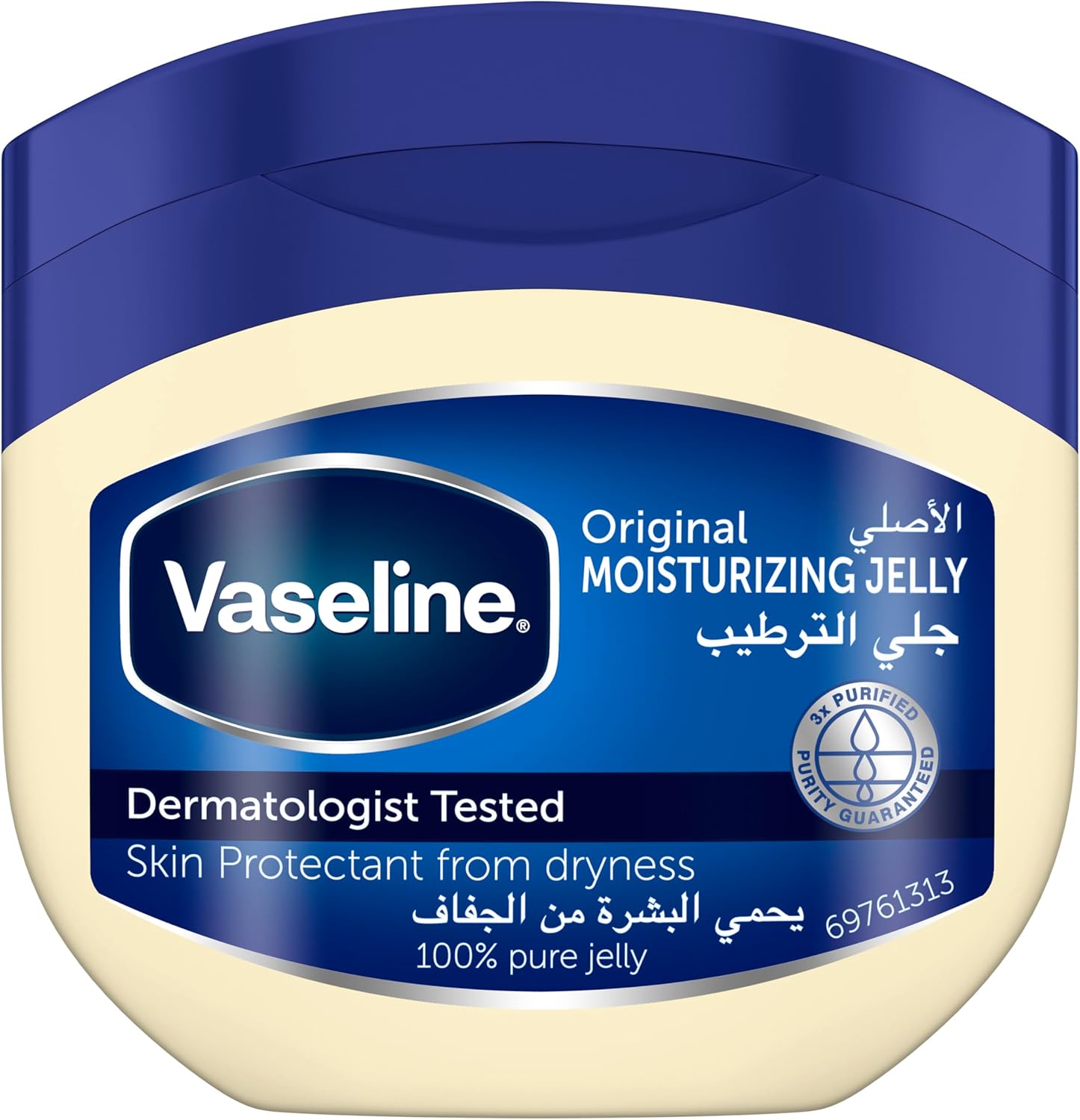
Description
💆♀️ How to Use
- Apply a small amount to clean, dry skin
- Gently spread over dry or rough areas
- Use on lips, hands, elbows, knees, or heels
- Reapply as needed throughout the day

Vaseline Petroleum Jelly is one of the most recognizable skincare products for protecting dry skin and helping reduce moisture loss.
Made with highly purified petroleum jelly, it creates an occlusive layer over the skin that helps keep existing moisture from evaporating too quickly.
The original Vaseline formula uses 100% pure petroleum jelly and is marketed for dry, stressed, and sensitive skin.
Because of its simple formula and versatility, Vaseline Petroleum Jelly can fit into many daily skincare routines. It can be especially useful for dry lips, rough heels, elbows, hands, cuticles, and other areas that often get dry.
What Is Vaseline Petroleum Jelly?
Vaseline Petroleum Jelly is a skin-protective product made from 100% pure petrolatum, a purified blend of mineral oils and waxes.
Vaseline says its Original Healing Jelly undergoes a triple-purification process to ensure purity.

Unlike a conventional lotion, petroleum jelly does not primarily work by adding water to the skin. Instead, it forms a protective barrier that helps slow moisture loss.
This makes it especially useful when the skin feels dry, rough, tight, or uncomfortable.
Is Vaseline Petroleum Jelly Suitable for Daily Use?
Yes. Vaseline states that its Original Healing Jelly is gentle enough for regular use and can be applied as needed throughout the day.
Daily use can be particularly helpful for areas that repeatedly become dry, such as:
- Lips
- Hands
- Heels
- Elbows
- Knees
- Cuticles
- Dry patches
- Areas exposed to friction
The key is to apply an appropriate amount rather than covering the skin with an unnecessarily thick layer.
How Does Petroleum Jelly Work?
Petroleum jelly’s main benefit is its occlusive action.
It forms a
layer that helps slow transepidermal water loss. In simple terms, it helps prevent water already present in the skin from escaping too quickly into the surrounding air.
Think of it as a protective seal.
This is why petroleum jelly is particularly useful after moisturizing. The moisturizer supplies hydration, while petroleum jelly helps keep that moisture from evaporating quickly.
Helps Protect Dry Skin
Dry skin can become rough, flaky, and uncomfortable.
Vaseline Original Healing Jelly is specifically marketed for dry, damaged, and cracked skin.
The company states that its formula helps protect the skin while locking in moisture.
Apply a thin layer to particularly dry areas
Vaseline for Dry Hands
Frequent handwashing, soaps, cleaning products, weather, and low humidity can leave hands feeling dry.
Before bedtime, wearing comfortable cotton gloves afterward can help keep the product in place overnight.
Vaseline for Dry Heels
Cracked or rough heels can benefit from an occlusive product.
Apply petroleum jelly to clean, slightly damp heels and massage it gently into the skin. Using it consistently can help keep the area softer.
Vaseline’s product information specifically identifies feet, heels, hands, and elbows as areas where you can apply its petroleum jelly.
Vaseline for Dry Elbows and Knees
Elbows and knees commonly become rough because of friction and naturally thicker skin.
A small amount of petroleum jelly can help soften the surface and reduce moisture loss.
is clean and still slightly hydrated.
Vaseline for Chapped Lips
Petroleum jelly is also widely used for dry and chapped lips.
Vaseline describes its Original Healing Jelly as suitable for protecting lips against dryness and chapping.
Apply a thin layer whenever your lips feel dry.
For outdoor daytime use, remember that ordinary petroleum jelly is not a substitute for sunscreen.
If your lips need sun protection, use a lip product specifically formulated with appropriate SPF.
Vaseline for Cuticles
Dry cuticles can become rough and uncomfortable.
Applying a small amount of petroleum jelly to the cuticles can help soften them and reduce moisture loss.
This is especially useful at night when the product can remain on the skin for several hours.
Vaseline for Rough Skin
Rough skin is often associated with inadequate moisture and a weakened skin barrier.
Petroleum jelly can create a protective surface layer, helping the skin retain moisture more effectively. Vaseline describes its petroleum jelly as an occlusive moisturizer.
It can therefore be useful as the final step in a simple moisturizing routine.
Vaseline for Sensitive Skin
According to the official product information, Vaseline Original Healing Jelly is marketed as hypoallergenic, non-comedogenic, and fragrance-free.
Vaseline also states that the Original formula is suitable for sensitive skin and has received recognition from the National Eczema Association for symptoms associated with sensitive skin and dryness.
However, sensitive skin can react differently from person to person. If you have unusually reactive skin, patch testing a new product is still a sensible precaution.
Vaseline and the Skin Barrier
The skin barrier helps protect the body from external irritants while reducing unnecessary water loss.
When the barrier becomes compromised, the skin may feel dry, tight, rough, or irritated.
Petroleum jelly can support barrier care by forming an occlusive layer over the skin.
Vaseline describes this barrier effect as helping protect skin and support its natural recovery process.
This is one reason petroleum jelly remains popular in modern skincare routines.
Vaseline for Nighttime Skincare
One of the easiest ways to incorporate petroleum jelly into a daily routine is at night.
A simple routine can be:
- Cleanse your skin.
- Apply your normal moisturizer.
- Allow the moisturizer to settle.
- Apply a thin layer of Vaseline to particularly dry areas.
- Leave it overnight.
Vaseline itself explains that petroleum jelly is generally used after moisturizer because it helps seal in moisture from the products underneath.
This type of routine is sometimes called “slugging.”
What Is Slugging?
Slugging is a skincare technique in which you apply an occlusive layer, commonly petroleum jelly,
The objective is to reduce overnight moisture loss.
It can be especially useful for dry skin. Still, people with oily or acne-prone skin may prefer applying petroleum jelly only to selected dry areas rather than the entire face.
Does Vaseline Hydrate Skin?
There is an important distinction.
Petroleum jelly does not function primarily as a water-based hydrator. Instead, it helps retain existing moisture by reducing water evaporation from the skin.
For this reason, many people use it over slightly damp skin or after applying a moisturizer.
Petroleum jelly alone when the goal is improved hydration.
Does Vaseline Clog Pores?
The official Vaseline FAQ states that its highly purified jelly is non-comedogenic, meaning it is not expected to clog pores.
However, individual skin routines differ.
If you have oily or acne-prone skin, you may prefer using a small amount on dry areas instead of applying a heavy layer across the entire face.
Vaseline for Minor Dryness and Chafing
Petroleum jelly can also help protect skin from friction and dryness.
The official Original Healing Jelly product information describes its use for protecting skin from dryness and chafing.
This can make it useful for areas where repeated rubbing causes discomfort.
Apply a thin layer to clean, intact skin before activities that commonly create friction.
Vaseline for Minor Scrapes
Vaseline’s official information also describes petroleum jelly as useful for protecting minor cuts, scrapes, and burns.
For any wound, clean the area properly first and follow medical guidance when needed. Petroleum jelly should not be treated as an antibacterial medication.
Deep wounds, serious burns, infected wounds, or wounds that do not heal properly require professional medical care.
Vaseline for Everyday Beauty Care
Petroleum jelly’s simplicity makes it useful beyond basic moisturizing.
It can be incorporated into routines for:
- Dry lips
- Rough heels
- Dry hands
- Cuticles
- Elbows
- Knees
- Chafing
- Dry patches
- Overnight moisture sealing
Vaseline also describes additional cosmetic uses for its Original Healing Jelly, including caring for tattoos and softening chapped lips.
How to Apply Vaseline Petroleum Jelly
Using petroleum jelly is simple.
Step 1: Clean the Skin
Wash the area and gently pat it dry.
Step 2: Use a Small Amount
Scoop a small amount with clean fingertips.
Step 3: Spread Thinly
Gently massage the jelly across the dry area.
Step 4: Reapply When Necessary
Vaseline’s instructions say you can reapply it as needed throughout the day.
You don’t need a thick layer to get the barrier benefit.
How Often Can You Use It?
Most people can use petroleum jelly daily and reapply it as needed.
Some people use it once at night, while others apply it several times a day to particularly dry areas.
The right frequency depends on your skin and the environment.
For example, frequent handwashing may mean that hands need more frequent application.
Vaseline in Hot Weather
People living in hot climates may prefer using petroleum jelly selectively.
Because it creates an occlusive layer, heavy application can feel greasy, especially in warm, humid conditions.
Instead of applying a thick layer over your entire body, focus on dry areas such as heels, elbows, knees, and cuticles.
Vaseline in Dry Weather
Cold or dry environments can increase moisture loss from the skin.
During these conditions, petroleum jelly can be particularly useful as a protective final layer.
Apply it after moisturizing to keep skin comfortable longer.
Vaseline for Men and Women
Vaseline Petroleum Jelly suits general skincare and isn’t limited to one gender.
Men and women can use it on dry lips, hands, feet, elbows, knees, cuticles, and other areas that need moisture protection.
The product’s usefulness depends more on individual skin needs than gender.
Vaseline for the Whole Family
The official Vaseline website describes its Original Healing Jelly range as suitable for the whole family and highlights uses ranging from dry skin and lips to baby-related skin care.
For infants or children, always follow age-specific product directions and consult a healthcare professional if there is significant irritation or an unexplained rash.
Benefits at a Glance
Vaseline Petroleum Jelly can provide several practical skincare benefits:
- Helps lock in moisture
- Protects dry skin
- Helps soften rough areas
- Supports the skin barrier
- Helps reduce moisture loss
- Protects chapped lips
- Conditions dry hands
- Softens rough heels
- Helps protect elbows and knees
- Useful for dry cuticles
- Helps protect against chafing
- Suitable for regular use
- 100% pure petroleum jelly in the Original formula
- Triple-purified
- Hypoallergenic
- Non-comedogenic
- Fragrance-free in the Original Healing Jelly formulation
Who Should Consider Vaseline Petroleum Jelly?
Vaseline can be particularly useful for people who experience:
- Dry skin
- Rough heels
- Chapped lips
- Dry hands
- Dry elbows
- Rough knees
- Dry cuticles
- Skin affected by friction
- Moisture loss
- Seasonal dryness
It is also a practical product for people who prefer simple skincare formulas.
Things to Remember
Although petroleum jelly is versatile, more isn’t always better.
Use a thin layer and focus on areas that actually need additional protection.
Product and assess whether another ingredient or underlying condition could be responsible.
Also remember that petroleum jelly does not provide UV protection, so it should not replace sunscreen.
Frequently Asked Questions
Is Vaseline Petroleum Jelly suitable for daily use?
Yes. Vaseline states that Original Healing Jelly can be used regularly and reapplied as needed throughout the day.
Can I use Vaseline every night?
Yes. You can use a thin layer as the final step of an evening skincare routine, especially on dry areas.
Can I use Vaseline on my face?
Many people use petroleum jelly on facial skin, particularly on dry areas or as an overnight occlusive. Vaseline states that its Original Jelly is non-comedogenic.
Does Vaseline moisturize the skin?
It mainly helps prevent moisture loss rather than adding water directly to the skin. It works particularly well over moisturizer or slightly damp skin.
Can Vaseline help dry lips?
Yes. Vaseline recommends petroleum jelly to protect lips from dryness and chapping.
Can I use Vaseline on cracked heels?
Yes. Vaseline identifies feet and heels as suitable areas for application.
Is Vaseline suitable for sensitive skin?
The Original Healing Jelly is marketed as hypoallergenic and suitable for sensitive skin.
Does Vaseline contain perfume?
The Original Healing Jelly formulation is listed as fragrance-free. Always check the packaging because other Vaseline products may contain additional ingredients.
Can Vaseline replace moisturizer?
But it does not provide the same function as a water-based moisturizer. Many people use moisturizer first and petroleum jelly afterward.
Can Vaseline be used for chafing?
Yes. The official Original Healing Jelly product information lists protection against chafing as one of its uses.
Final Thoughts
Vaseline Petroleum Jelly Suitable for Daily Use is a simple and versatile skincare option for people who want to protect dry skin and reduce moisture loss.
Its main ingredient, highly purified petroleum jelly, creates an occlusive barrier over the skin. This helps the skin retain its existing moisture and can support a softer, smoother, more comfortable appearance.
Its versatility is one of its biggest advantages. Use a small amount on dry lips, hands, heels, elbows, knees, cuticles, and other dry areas. You can also incorporate it into an evening skincare routine as a final moisture-sealing step.
Preferably after moisturizing or while the skin is slightly damp. Use a thin layer and reapply when needed.
With its simple formulation, triple-purified petroleum jelly, and broad range of everyday applications, Vaseline Original Petroleum Jelly remains a practical addition to a daily skincare routine.


Reviews
There are no reviews yet.