

Lightweight and easy to use for all hair types.
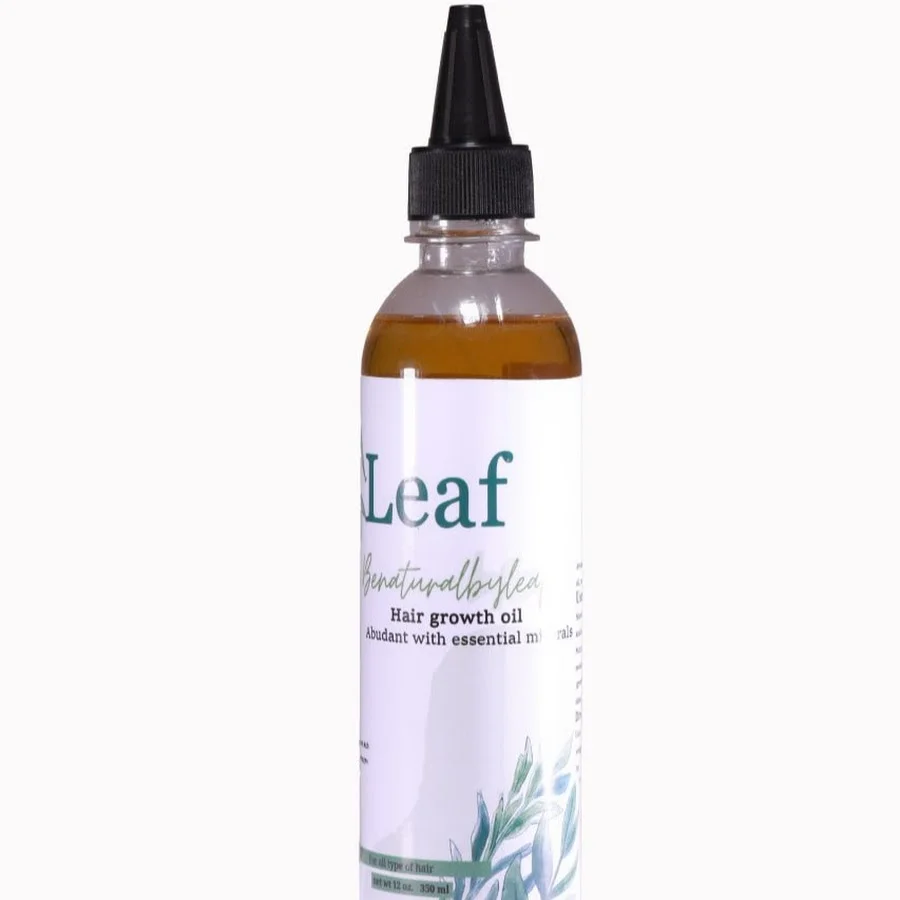
Leaf-Infused Hair Growth Oil is a botanical hair-care product designed for people who want to nourish the scalp, moisturize dry hair, improve manageability, and support a healthy-looking hair-care routine.
Leaf-infused oils commonly combine a carrier oil with botanical leaves or herbal extracts such as rosemary, curry leaves, neem, bhringraj, or other plant ingredients.
The exact ingredients and benefits depend on the specific product.
For example, current products marketed as leaf-infused hair oils include rosemary leaf-infused formulas containing sunflower, jojoba, argan, avocado, coconut, vitamin E, peppermint, and lavender oils.
Other hair oils use ingredients such as curry leaves, bhringraj, rosemary, and fenugreek in botanical hair-care formulas.
What Is Leaf-Infused Hair Growth Oil?
Leaf-infused hair oil is typically made by combining a carrier oil with botanical leaves or leaf extracts.
The botanical ingredients are incorporated into the oil to create a nourishing scalp and hair treatment.
Depending on the formula, leaf-infused oils may contain ingredients such as:
- Rosemary leaf
- Curry leaf
- Neem leaf
- Bhringraj
- Aloe vera
- Peppermint
- Lavender
- Coconut oil
- Jojoba oil
- Castor oil
- Avocado oil
- Argan oil
- Vitamin E
Not every product contains all of these ingredients, so shoppers should always check the actual product label.
Benefits of Leaf-Infused Hair Oil
A botanical hair oil can provide several cosmetic benefits when used consistently in a hair-care routine.
Helps Nourish the Scalp
The scalp is an important part of healthy-looking hair. Massaging in a suitable hair oil can condition the scalp and help prevent both your scalp and hair from feeling excessively dry.
Botanical hair oils frequently combine plant extracts with nourishing carrier oils to create a scalp-care treatment.
For example, one current rosemary leaf-infused formula combines rosemary extract with jojoba, argan, avocado, coconut, and vitamin E.
Helps Moisturize Dry Hair
Dry hair can feel rough, brittle, or difficult to manage.
Hair oils can coat the hair shaft and provide lubrication, helping hair feel smoother and softer.
This makes leaf-infused oil particularly useful for people who regularly deal with dry-looking hair.
Apply a small amount to the lengths and ends, especially if those areas feel dry.
Supports Softer-Looking Hair
Regular conditioning can improve how hair appears.
A suitable botanical oil can help reduce the rough sensation associated with dry hair and make strands easier to handle.
For best results, use a moderate amount rather than saturating the hair with oil.
Leaf-Infused Oil for Natural Hair
Natural hair frequently benefits from regular moisturizing and conditioning.
You can incorporate a leaf-infused hair oil into a natural-hair routine alongside shampoo, conditioner, leave-in conditioner, and hair masks.
It may be useful for:
- Natural hair
- Curly hair
- Curly hair
- Textured hair
- Thick hair
- Dry hair
- Protective hairstyles
For thick or dense hair, apply the oil in sections to help it distribute evenly.
Leaf-Infused Hair Oil for Curly Hair
Curly hair can become dry and difficult to detangle.
A nourishing oil can help provide lubrication, which may make hair easier to handle during styling.
For curly hair, apply a small amount to the palms and gently smooth it through the lengths and ends.
Avoid excessive brushing or combing because mechanical stress can contribute to breakage.
Leaf-Infused Hair Oil for Curly Hair
Curly hair can benefit from a consistent moisture-focused routine.
Use a botanical oil after moisturizing to help maintain a conditioned feel.
A simple routine could be:
Moisturizer → Leaf-Infused Hair Oil → Gentle Styling
on the scalp if you are prone to buildup.
Rosemary Leaf-Infused Hair Oil
Rosemary is one of the most popular botanical ingredients in modern hair-care oils.
Current rosemary leaf-infused hair-oil products are marketed for scalp care and hair growth support.
One product researched for this article contains rosemary leaf extract alongside sunflower, jojoba, argan, avocado, coconut, vitamin E, peppermint, and lavender oils.
However, product marketing claims should not be confused with guaranteed clinical results.
If a product contains rosemary, check the exact concentration and formulation before comparing it with other rosemary hair products.
Curry Leaf Hair Oil
Curry leaves are another botanical ingredient commonly found in herbal hair oils.
Current products marketed with curry leaves combine them with ingredients such as fenugreek and other botanical extracts.
Curry-leaf hair oils are frequently marketed toward consumers interested in traditional or plant-based hair care.
Neem Leaf-Infused Hair Oil
Neem is another botanical ingredient used in hair-care products.
Current online product listings include neem leaf-infused hair oils marketed for strengthening and natural hair care.
Because neem oils can vary widely in formulation, always check whether the product contains neem leaf extract, neem oil, or a combination of botanical ingredients.
Bhringraj Leaf Hair Oil
Bhringraj is traditionally used in Ayurvedic hair-care products.
Current marketplace results show numerous Bhringraj oils and herbal hair oils marketed for scalp nourishment and hair care.
If you are purchasing a Bhringraj-based product, check the botanical name and ingredient list to understand exactly what is included.
Does Leaf-Infused Hair Oil Help Hair Growth?
This is one of the most common questions shoppers ask.
The term “hair growth oil” is widely used in cosmetic marketing, but an oil should not automatically be considered a medically proven hair-growth treatment.
Some commercial botanical oils make hair-growth claims. For example, rosemary hair-oil products may be marketed as supporting hair growth and decreasing hair fall.
However, results can vary considerably, and cosmetic oils should not be presented as guaranteed treatments for hair loss.
If you have persistent, sudden, or significant hair loss, a medical expert can help determine the underlying cause.
Leaf-Infused Hair Oil for Hair Breakage
Hair breakage can occur when strands become weak, dry, or exposed to excessive mechanical or chemical stress.
Oil can lubricate hair and make it easier to handle, especially during detangling and styling.
A good routine includes:
- Regular conditioning
- Gentle detangling
- Reduced heat styling
- Avoiding excessive chemical processing
- Avoiding very tight hairstyles
- Using appropriate moisturizing products
Leaf-infused oil can be one part of this routine.
Leaf-Infused Oil for Dry Scalp
A dry-feeling scalp can be uncomfortable.
Some hair oils are specifically marketed for scalp moisturizing. Applying an appropriate oil sparingly may help reduce the sensation of dryness.
However, don’t treat persistent itching, scaling, redness, sores, or other scalp problems with cosmetic oil alone. Consider professional advice if symptoms continue.
How to Use Leaf-Infused Hair Growth Oil
product.
A common application method is:
Step 1: Part the hair into sections.
directly to the scalp or hair.
Step 3: Massage gently with your fingertips.
Step 4: Continue massaging for several minutes.
Step 5: Distribute the remaining oil through the lengths and ends.
Step 6: Leave it according to the product directions.
Step 7: Wash your hair as needed.
One current rosemary leaf-infused oil recommends using a small amount on the scalp, gently massaging, leaving the product for at least 30 minutes or overnight, and washing it out with shampoo and conditioner.
Don’t automatically follow another product’s directions; follow the instructions that come with your own product.
How Often Should You Use Leaf-Infused Hair Oil?
There is no universal frequency.
Some products are designed for several applications per week, while others may be intended for occasional use.
Start with the manufacturer’s instructions and watch how your scalp and hair respond.
If your hair becomes greasy or your scalp develops buildup, reduce the amount or use it less often.
Leaf-infused oil provides protective benefits for appropriate hair maintenance.
Apply a small amount of oil to exposed hair when it needs extra conditioning.
Avoid excessive use because built-up oil and styling products can make cleansing harder.
Also avoid hairstyles that create excessive tension around the hairline.
Leaf-Infused Hair Oil for Men and Women
Both men and women can generally use hair oils.
The important considerations are:
- Hair texture
- Hair density
- Scalp disorder
- Hair length
- Dryness
- Styling routine
A botanical oil may therefore suit many different hair-care routines.
Leaf-Infused Hair Oil vs. Hair Serum
Hair oil and hair serum are not necessarily the same thing.
Hair oil: Usually contains plant oils or other oil-based ingredients and is often used for conditioning and lubrication.
Hair serum: Can have a lighter texture and may contain silicones, botanical extracts, proteins, or other cosmetic ingredients.
If you prefer a richer, traditional treatment, an oil may be a better fit. If you want lightweight finishing and shine, a serum may be preferable.
Leaf-Infused Hair Oil vs. Hair Food
Hair food is generally a thicker cream or pomade-like product, while hair oil is liquid.
Hair food can provide a richer coating, while oil may spread more easily through the hair.
Both can fit into a moisturizing routine, but using too many rich products together can cause buildup.
Tips for Better Hair-Care Results
To get the most from a leaf-infused hair oil:
- Start with a small amount.
- Massage the scalp gently.
- Focus oil on dry lengths and ends.
- Avoid excessive application.
- Wash regularly to control buildup.
- Condition after shampooing.
- Minimize unnecessary heat.
- Avoid tight hairstyles.
- Detangle gently.
- Follow the product’s directions.
Consistency is more important than using a large amount of oil.
Safety and Patch Testing
Botanical oils can contain essential oils, fragrances, and plant extracts that may irritate sensitive skin.
Before using a new product extensively, test a small amount according to the manufacturer’s safety instructions.
Stop using the product if you experience significant irritation.
Scalp unless they are appropriately formulated or diluted according to reliable product directions.
Why Choose Leaf-Infused Hair Growth Oil?
Leaf-infused hair oils appeal to consumers interested in botanical and traditional hair-care routines.
Depending on the formula, potential cosmetic benefits include:
- Scalp conditioning
- Hair moisturization
- Improved softness
- Better manageability
- Added shine
- Reduced feeling of dryness
- Easier styling
- Botanical hair care
The exact benefits depend on the ingredients and formulation of the individual product.
Final Thoughts
Leaf-Infused Hair Growth Oil is a popular botanical hair care category designed to nourish the scalp and condition hair.
Products in this category may contain ingredients such as rosemary leaves, curry leaves, neem, bhringraj, aloe vera, peppermint, coconut oil, jojoba oil, avocado oil, argan oil, and vitamin E.
Current products demonstrate the variety of formulations available. For example, a rosemary leaf-infused oil combines several plant oils with rosemary, peppermint, lavender, and vitamin E, while other products use curry leaf or neem-based formulations.
For consumers searching for leaf-infused hair growth oil, herbal hair oil, natural hair oil, botanical scalp oil, rosemary hair oil, or hair oil for dry hair, this type of product can be a useful addition to a consistent hair-care routine.
The best approach is to use a moderate amount, follow the manufacturer’s instructions, massage gently, and pair oiling with proper cleansing, conditioning, moisturizing, and gentle styling.


see nnnm –
ok