
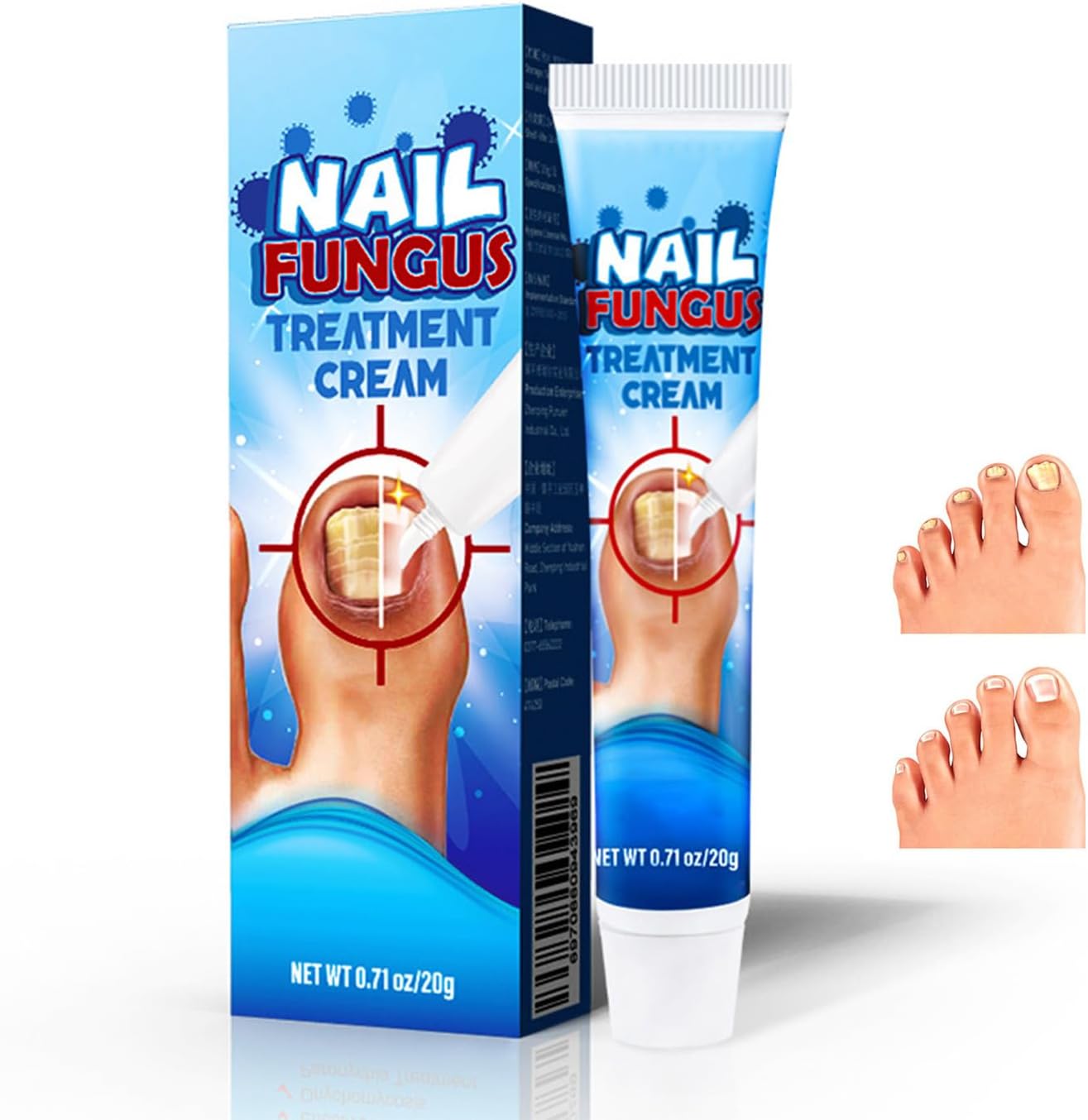
💆♀️ How to Use
- Clean and dry affected nails thoroughly
- Apply a thin layer of cream directly to the nail
- Gently massage until absorbed
- Use 1–2 times daily or as directed
- Continue use consistently

Strong Anti-Fungal Toenail Cream is a targeted nail-care treatment for people concerned about discolored, thickened, brittle, cracked, or damaged toenails.
Products in this category are often formulated to provide antifungal care while also supporting moisture
Current nail-fungus products use different active ingredients and formulations. For example, an FDA-listed OTC fungal-nail cream can contain tolnaftate 1%, while other antifungal nail products use ingredients such as miconazole.
Because the exact formula of a product titled “Strong Anti-Fungal Toenail Cream” can vary, always verify the active ingredients and directions printed on the package.
What Is Strong Anti-Fungal Toenail Cream?
A strong anti-fungal toenail cream is intended to provide topical care for nails affected by fungal concerns and associated changes in appearance.
Fungal nail problems may cause nails to become:
- Discolored
- Thickened
- Brittle
- Crumbly
- Distorted
- Difficult to trim
- Rough-looking
For example, an OTC tolnaftate 1% fungal-nail product is labeled to treat nail fungus and associated symptoms, including discoloration, thickening, splitting, crumbling, and brittleness.
Key Benefits of Anti-Fungal Toenail Cream
A properly formulated nail treatment can provide several useful functions:
Antifungal support: Helps target susceptible fungal organisms when the active ingredient matches the infection.
Nail care: Helps maintain the appearance of discolored or damaged nails.
Nourishing treatment: Some formulas contain moisturizing and botanical ingredients intended to condition the nail and surrounding skin.
Moisture support: Ingredients such as glycerin, oils, aloe vera, or vitamin E may help prevent excessive dryness.
Convenient application: Cream or liquid treatments can be applied directly to affected nails.
The precise benefits depend on the product’s formulation and active ingredient.
Helps Treat Toenail Fungus
Toenail fungus, medically known as onychomycosis, can cause visible changes to the nail.
A suitable antifungal treatment can be part of an overall management routine.
However, not every discolored or thickened toenail is caused by fungus. Trauma, psoriasis, bacterial infections, and other conditions can create similar symptoms.
For this reason, persistent or severe nail changes may require evaluation by a healthcare professional.
Nail Repair Treatment for Damaged Nails
Alongside antifungal care, many modern nail treatments are
A current UAE nail-fungal product listing describes a treatment designed for thick, broken, and discolored toenails and fingernails, with claims around moisturizing and nourishing the nails.
Nail-repair products may improve a nail’s cosmetic appearance as it grows.
A damaged nail cannot regenerate instantly. Healthy nail growth takes time.
Nourishing Care for Toenails
Toenails can become dry and brittle, especially with repeated pressure from footwear.
A nourishing treatment can help condition the nail plate and surrounding skin.
Some dedicated nail creams use ingredients such as glycerin, urea, almond oil, panthenol, squalane, and vitamin E to moisturize and condition dry or brittle nails.
These ingredients are examples of cosmetic nail-care ingredients; they are not necessarily present in every antifungal product.
Antifungal Cream for Thick Toenails
Thickened toenails are one of the symptoms commonly associated with fungal nail infections.
When a fungal infection is confirmed, treatment may need to continue for an extended period because toenails grow slowly.
A topical treatment may therefore need consistent application, following the labeled instructions.
Do not aggressively scrape or cut away thickened nail material because this can cause injury.
Antifungal Treatment for Discolored Toenails
Yellow, white, brown, or otherwise discolored nails may be associated with fungal infection, but discoloration alone does not confirm a fungal diagnosis.
Some fungal nail treatments are specifically marketed for discolored nails and aim to help restore a healthier-looking appearance as the affected nail grows out.
Consistent nail care and appropriate treatment are important because visible improvement may take time.
Helps Improve Brittle Nails
Brittle nails can split, crack, or crumble.
A nail treatment that combines antifungal care with moisturizing ingredients may help maintain a more conditioned appearance.
However, nail brittleness can have causes unrelated to fungus, including trauma, excessive moisture exposure, certain medical conditions, and nutritional issues.
If brittleness continues despite appropriate nail care, seek professional advice.
Moisturizing Toenail Treatment
Nail treatments are not only about fungus. Maintaining healthy-looking surrounding skin is also important.
Moisturizing ingredients can help reduce dryness and improve the feel of the skin around the toenail.
Some dedicated nail creams are designed specifically to improve hydration and flexibility of dry or damaged nails and cuticles.
How to Use Anti-Fungal Toenail Cream
Always follow the instructions for your particular product. A typical topical antifungal routine may involve:
Step 1: Clean the Foot
Wash the foot and gently remove dirt or residue.
Step 2: Dry Thoroughly
Dry the toenail and the surrounding skin completely. problems.
Step 3: Apply the Product
Follow the product label.
Some antifungal products specifically instruct users to apply the treatment to the affected nail and surrounding skin.
Step 4: Wash Your Hands
Wash your hands after application unless your hands are the area being treated.
Step 5: Continue Consistently
Use the treatment for the full period specified on the label or by your healthcare professional.
Keep Toenails Clean and Dry
Good foot hygiene complements antifungal treatment.
Keep the feet clean and dry, particularly between the toes.
Change socks regularly and choose breathable footwear when possible.
For athlete’s foot products, official OTC directions commonly emphasize keeping feet dry and changing shoes or socks regularly.
Nail Care During Treatment
While using an antifungal nail treatment:
- Keep nails trimmed carefully.
- Avoid sharing nail clippers.
- Clean nail tools after use.
- Keep feet dry.
- Change socks regularly.
- Avoid tight footwear.
- Do not pick or tear damaged nails.
- Follow the product directions consistently.
These habits can support a cleaner, healthier foot-care routine.
Anti-Fungal Toenail Cream for Fingernails
Although the product title emphasizes toenails, some fungal nail treatments are designed for both fingernails and toenails.
Current nail-treatment listings specifically describe products for toenails and fingernails.
Always check whether the exact product you purchased is labeled for fingernail use before applying it.
Is Anti-Fungal Toenail Cream a Nail Growth Treatment?
An antifungal nail product is primarily intended to manage fungal concerns rather than accelerate normal nail growth.
As the fungal problem improves, the healthy portion of the nail can gradually grow forward.
Toenails grow slowly, so that cosmetic improvement can take considerably longer than improvement seen with some skin conditions.
Avoid promising instant nail restoration or guaranteed results.
When Should You See a Doctor?
Professional evaluation is especially important when:
- Several nails are affected.
- The nail is severely thickened.
- There is significant pain.
- The skin around the nail becomes red or swollen.
- There is drainage or pus.
- The infection keeps returning.
- The condition does not improve with appropriate treatment.
- You have diabetes or poor circulation.
- You have a weakened immune system.
A healthcare professional can determine whether the nail problem is actually fungal and recommend the appropriate treatment.
Antifungal Cream vs. Nail Nourishing Cream
These products serve different purposes.
Antifungal treatment: Contains an active antifungal ingredient intended to target susceptible fungi.
Nourishing nail cream: Primarily moisturizes and conditions dry, brittle nails and surrounding skin.
Some products combine both types of care, but the product’s active ingredients determine whether it is actually an antifungal medicine.
For example, an OTC fungal-nail cream may contain tolnaftate 1% as the active antifungal ingredient.
Choosing a Toenail Treatment
When selecting a product, check:
Active ingredient: Identify the antifungal ingredient and concentration.
For nails.
Application method: Check whether it is a cream, liquid, brush-on solution, or another format.
Treatment duration: Follow the labeled treatment schedule.
Safety warnings: Read contraindications and precautions carefully.
Ingredients: Review inactive ingredients if you have allergies or sensitivities.
Why Choose a Nail Repair & Nourishing Treatment?
A product combining antifungal and nourishing care can appeal to people who want a more complete toenail routine.
It can be particularly relevant for nails that appear:
- Discolored
- Thick
- Brittle
- Dry
- Rough
- Cracked
- Damaged
The nourishing component can support the nail’s cosmetic appearance, while the antifungal component targets the appropriate microorganism when the formulation is suitable.
Final Thoughts
Strong Anti-Fungal Toenail Cream – Nail Repair Nourishing Treatment is a product category for people seeking targeted care for fungal-prone, discolored, thickened, brittle, or damaged toenails.
Current antifungal nail products demonstrate that formulations vary widely. Some use pharmaceutical antifungals such as tolnaftate 1%, while others use miconazole or different active ingredients.
Nourishing nail products may additionally contain ingredients such as glycerin, urea, almond oil, panthenol, squalane, and vitamin E to support moisture and nail conditioning.
For ecommerce SEO, strong and accurate keywords include strong anti-fungal toenail cream, toenail fungus treatment, nail repair treatment, antifungal nail cream, thick toenail treatment, discolored toenail treatment, brittle nail treatment, nourishing nail cream, and toenail care.
Because the exact product formulation was not specified, do not publish a specific active ingredient, strength, or medical claim unless it appears on the product’s packaging or official manufacturer information.


Reviews
There are no reviews yet.